
Why Collectors Obsess Over the Double Die Penny
The double die penny defect represents one of the most significant technological errors in US minting history.
This phenomenon arises during the working die production stage rather than during the actual striking of the coin blank.
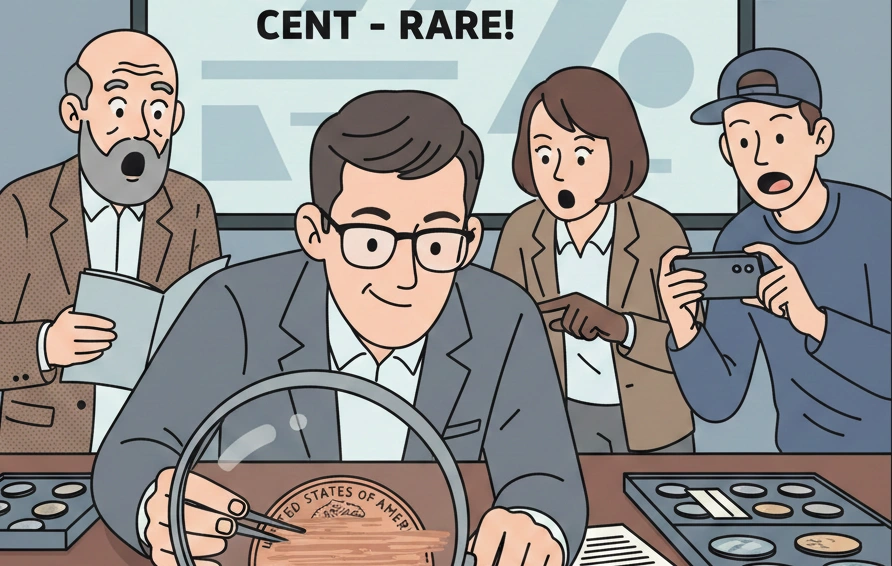
The market value of specimens with pronounced doubling demonstrates stable growth exceeding inflation rates multiple times.
The process of creating a working die in the 20th century involved multiple blows from a master hub onto a steel blank.
Misalignment of the hub between blows resulted in the fixation of two identical images on a single surface.
All coins produced using such a die inherit identical doubling characteristics.
Key Issues and Record Prices
Numismatic history identifies several dates serving as benchmarks for the Double Die Obverse (DDO) category.
The data regarding the rarest and most expensive specimens is presented below.
1955 Lincoln Cent Double Die Obverse
This issue is considered the most recognizable example of the error due to the extreme displacement of the date digits and inscriptions.
The mintage totaled approximately 20,000 - 24,000 specimens entering circulation through vending machines.
Record Price: 125,000 USD (MS65+ RD condition).
Average Price (AU58 condition): 2,500 - 3,500 USD.
Growth Dynamics: The average annual value increase stands at 7% over the last 15 years.
1969-S Lincoln Cent Double Die Obverse
The coin is characterized by sharp doubling of all obverse inscriptions and the date.
The discovery of the first specimens was accompanied by the seizure of batches by the US Secret Service due to suspicion of counterfeiting.
Record Price: 126,500 USD (Heritage Auctions, 2008).
Current Market Valuation (MS64): 75,000 - 95,000 USD.
Rarity Percentage: Fewer than 100 confirmed specimens are known to exist.
1972 Lincoln Cent Double Die Obverse
In 1972, several different types of doubling were recorded (Die 1, Die 2, etc.).
The "Die 1" variety represents the highest value, demonstrating the maximum divergence of contours.
Price in MS67 RD condition: Reaches 14,400 USD.
Volume of Identified Specimens: Approximately 250,000 pieces, making the coin accessible to a wide range of investors.
Statistical data shows a direct correlation between price and surface color (Red, Red-Brown, Brown).
Preserving the original copper luster provides a premium of 150–300% over the base price.
Price Dynamics by Decades (Example: 1955 DDO)
Period | Average Price (MS63 RD) | Percentage Change |
2000 - 2010 | 1,800 - 2,400 USD | +33% |
2010 - 2020 | 2,400 - 3,800 USD | +58% |
2020 - 2025 | 3,800 - 5,200 USD | +36% (over 5 years) |
The investment potential of coins with a confirmed grade (MS) remains consistently high with low volatility levels.
Price depreciation is observed only in specimens with storage defects, including corrosion and oxidation spots.
Classification of Doubling Classes
Researchers identify eight primary classes of Double Die with the coin appraisal app, differing in the physics of metal displacement.
Rotated (Class I): Displacement occurs along a circular axis relative to the center.
Distorted (Class II): Image deformation due to a mismatch between hub and blank sizes.
Design Hub (Class III): Use of two master hubs with differences in design.
Offset (Class IV): Linear displacement of the image to one side.
Pivoted (Class V): Displacement with a rotation point near the coin's edge.
Distended (Class VI): General thickening of details without clear separation of contours.
Modified (Class VII): Alteration of die elements between blows.
Tilted (Class VIII): Tilting of the hub creating uneven doubling depth.
Expert Appraisal Methodology
Determining Double Die authenticity requires analyzing specific features called "die markers."
These include microscopic scratches, dots, or cracks present on all coins struck by a given die.
The absence of characteristic markers despite the presence of doubling often indicates a modern counterfeit or Machine Doubling.
Factors Influencing Final Certification
Strike Strength: Deeply impressed details increase the value by 10–15%.
Field Condition: Absence of bag marks is critical for obtaining a grade above MS65.
Patina Stability: Even brown tones are valued higher than mottled coloration.
Certification: Coins without slabs (individual plastic capsules) trade at a 20–40% discount.
Impact of Production Automation on Error Rarity
Modernization of US Mint equipment in the late 20th century led to the implementation of the Single Squeeze die production process.
This technology significantly reduced the probability of classic Double Die emergence.
Modern errors (e.g., from 2006 or 2009) possess a less pronounced character, localizing in the central areas of the design.
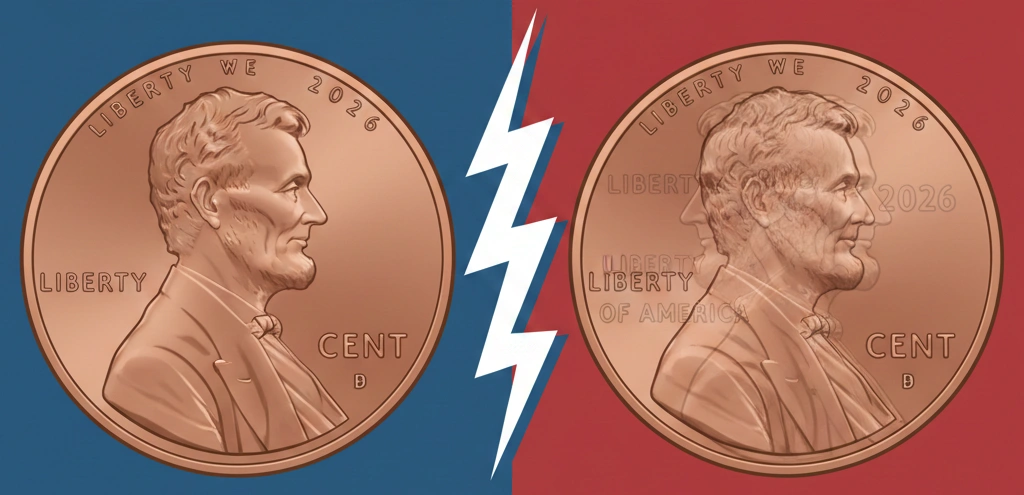
This circumstance fixes the historical supply volume of coins with strong doubling, making its increase impossible.
A stable supply volume alongside a growing number of market participants provides long-term price support.
Market Liquidity Comparison Table
Asset liquidity is determined by the time required to sell a lot at market price.
Coin Type | Liquidity Time (Days) | Sale Method |
1955 DDO MS64 | 1 - 7 | Auction / Dealer |
1972 DDO MS66 | 7 - 14 | Online Platforms |
1969-S DDO (Any Grade) | 1 - 3 | Major Auction |
1995 DDO MS68 | 14 - 30 | Specialized Dealer |
High liquidity for the 1955 DDO results from type recognition and constant demand across all price segments.
Risks and Mitigation Methods
The primary risk when dealing with Double Die is acquiring coins with Machine Doubling under the guise of a rare defect.
Thousands of specimens possessing visual similarity to Double Die but lacking collective value enter the secondary market annually.
Using electronic microscopes with 40x magnification allows for identifying the metal structure at the point of line separation.
A genuine Double Die maintains full relief height on both image contours.
Machine Doubling is characterized by a reduction in the relief level of the second contour, resembling a step.
Aggregate Indicators over 25 Years
Investments in certified Double Die Penny specimens since 2000 have shown a cumulative return of 240–310%.
This result exceeds the returns of many stock indices over the same period.
The lack of direct correlation between rare coin values and stock prices makes them an effective tool for portfolio diversification.
The technological nature of the error guarantees objectivity in rarity assessment, excluding subjective factors.
Double Die series coins remain a fundamental element of the US numismatic market, maintaining the status of the most sought-after defective issues.
Conclusion
Market analysis of the Double Die Penny confirms the status of these coins as stable financial assets.
Studying the physics of the minting process with the coin value app allows for precise classification of error types, excluding speculative valuations.
Auction statistics record an annual capital inflow into this segment, driven by the limited supply of original die pairs.
Professional storage and certification remain mandatory conditions for preserving the value of these objects in the long term.